What rural homeowners and land buyers should know before they break ground
Why drainfields fail (and what “good soil” actually means)
Common reasons a drainfield struggles over time:
A strong plan starts with site evaluation. Southwest District Health (SWDH) notes that an on-site evaluation is required prior to issuance of a subsurface sewage disposal permit.
Septic vs. sewer in the Treasure Valley: a practical decision framework
| Decision Point | Septic + Drainfield | Sewer Connection |
|---|---|---|
| Upfront feasibility | Depends on soil, slope, separation distances, and evaluation results | Depends on main availability, distance, easements, and city requirements |
| Primary “risk” variable | Soil performance and long-term protection of the drainfield area | Utility conflicts, right-of-way work, and tap-in coordination |
| Excavation scope | Tank excavation, drainfield trenches/bed, pipe runs, backfill, and grading | Trenching to main, bedding, backfill, surface restoration, and inspections |
| Ongoing reality | Protect drainfield from compaction, excess water, and misuse | Fewer on-lot components, but still subject to line maintenance and access rules |
Did you know? Quick facts that prevent expensive mistakes
Step-by-step: how drainfield installation typically works in the Boise area
1) Confirm feasibility early (before finalizing your build plan)
2) Protect and reserve the drainfield area
3) Call 811 and verify what 811 does not mark
Also, plan for a “private locate” strategy when needed. Some privately owned lines (for example, irrigation, private power beyond the meter, or site-installed lines not in member databases) may require additional locating beyond the public 811 ticket. The goal is simple: no surprises when trenching for the septic tank outlet line, distribution piping, or utility crossings.
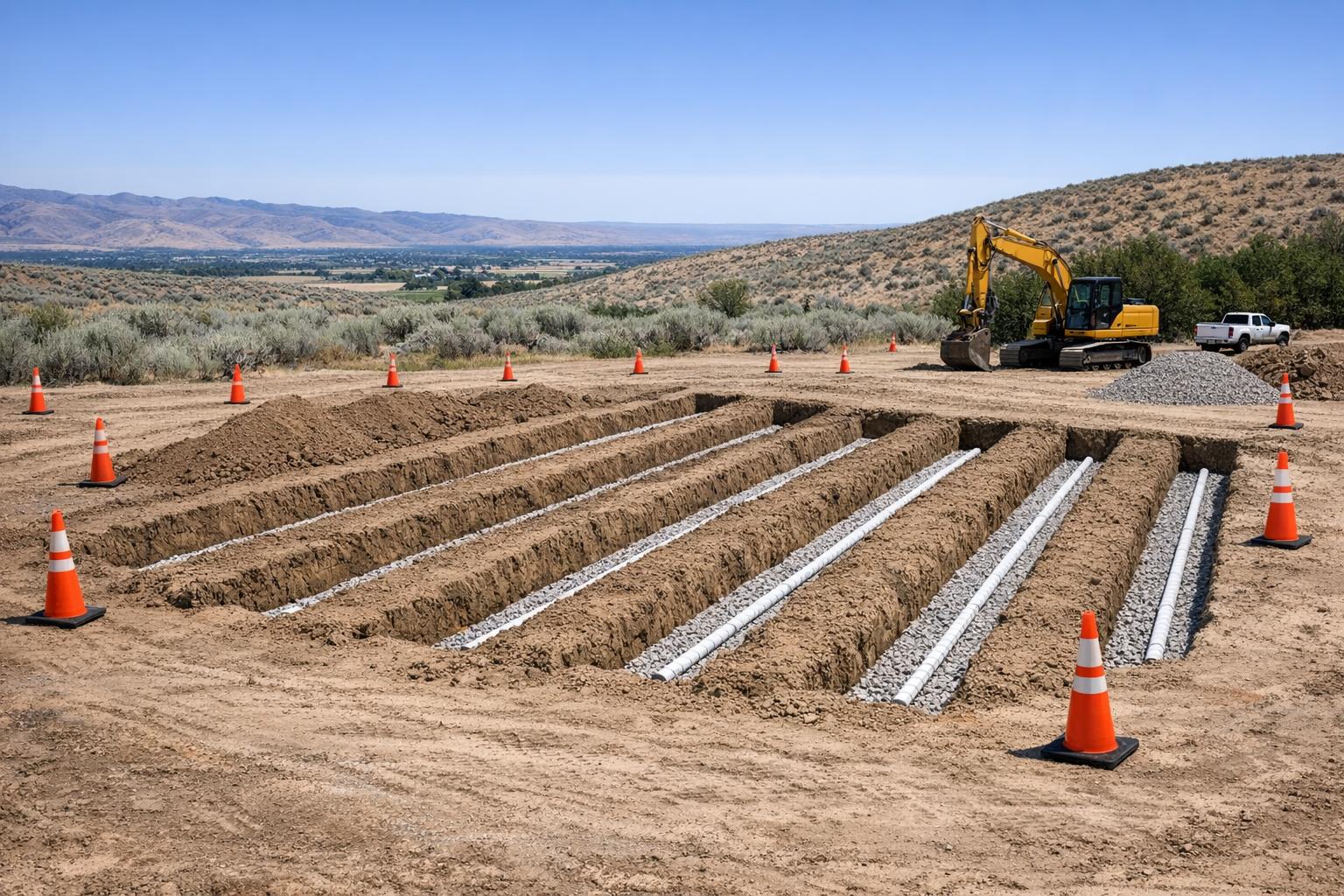
4) Excavate to plan, maintain grade control, and keep soils clean
5) Coordinate inspections and document what was built
6) Final grading: keep stormwater away from the drainfield
Local Boise angle: timing your project around weather, soils, and scheduling
Also consider how your full site plan interacts: driveway access, building pad elevation, future shop locations, and utility trenching routes. A coordinated lot development approach helps keep the drainfield protected while still moving the rest of the project forward.
How C3 Groundworks supports drainfield installation projects
If your project includes related scopes, we can also help align the sequence with: