
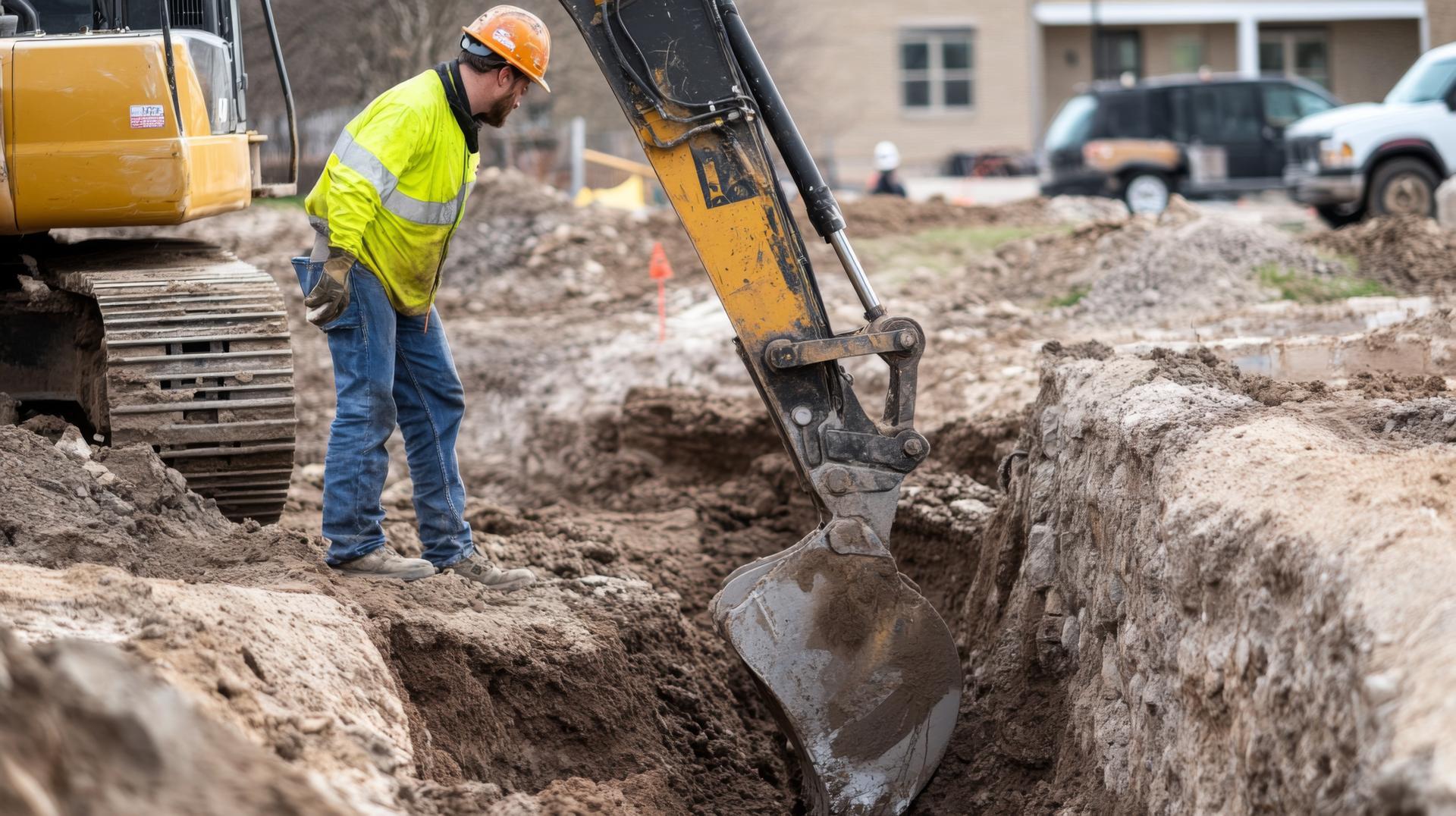
A smoother build starts before the first bucket hits the ground
Sitework is where timelines either stay on track—or unravel. In the Boise/Treasure Valley area, excavation decisions affect everything that follows: drainage performance, concrete longevity, utility reliability, and even how your driveway holds up through freeze-thaw seasons. This guide gives Boise homeowners, small builders, and property managers a clear checklist for vetting an excavation contractor in Boise—without getting lost in jargon or surprise requirements.
What “excavation” really includes (and why it matters)
Many people hear “excavation” and picture digging a hole. In reality, a quality excavation contractor coordinates a chain of tasks that set the technical foundation for your whole project—residential or small commercial:
Typical excavation & site-prep scope in Boise:
Site clearing & grading for drainage, access, and a build-ready pad
Foundation/footing excavation with proper subgrade prep and compaction
Utility trenching for water, sewer, electrical conduit, gas, telecom, irrigation, and drainage
Septic system installation (where applicable) with permitting/inspections coordination
Concrete prep for slabs, driveways, RV pads, and walkways (base, reinforcement coordination, drainage)
Demolition & removal when existing concrete/structures must come out first
When these steps are done right, you’re buying predictability: fewer change orders, fewer delays waiting on corrections, and fewer long-term issues like settlement, cracking, or drainage failures.
Boise-specific context: frost depth, drainage, and utilities
Boise-area projects face a few recurring realities that should be part of your contractor conversation:
1) Frost protection is a real design driver
The City of Boise amends frost protection requirements to reference a 24-inch frost line below finished grade for certain foundation-related provisions. That impacts how footing excavations and some utility depths are planned and inspected.
2) “Call before you dig” isn’t optional
Idaho’s damage-prevention requirements include notifying a one-number service no less than two business days (and not more than ten) before excavation, and typically pre-marking the excavation path in white unless an exception applies.
3) Septic work is a permitting workflow, not just an install
In the Treasure Valley region, Central District Health (CDH) is a key player in on-site sewage permits. They outline application steps, coordination for test holes/site evaluation, and a review timeline (including that they review applications within working days and communicate with the city/county).
A step-by-step checklist for hiring an excavation contractor in Boise
Step 1: Confirm licensing, bonding, and insurance (then verify scope)
Ask for proof of coverage and confirm it matches your job type (residential vs. commercial, demolition, utility trenching, etc.). Also confirm who is responsible for traffic control (if needed), haul-off, and disposal.
Step 2: Ask how they handle utility locates and site marking
A professional contractor should have a routine for scheduling locations, coordinating the legal start time on the ticket, and protecting markings through the work. In Idaho, excavators typically must give notice at least two business days before digging and pre-mark the excavation path in white unless an exception applies.
Step 3: Review their grading and drainage approach (not just their equipment list)
The best question is simple: “How will water move across and away from this property after you’re done?” Look for clear answers about:
• preserving/stockpiling topsoil vs. burying it
• protecting slopes and preventing erosion
• tying in downspouts, swales, or drains (when part of the plan)
• final grade that supports landscaping and hardscapes
Step 4: For foundations and slabs, ask about subgrade prep and compaction
Concrete performance is heavily influenced by what’s underneath it. A reliable contractor can explain how they prepare the subgrade, how they manage wet/soft spots, and how they verify compaction for the pad or trench backfill. This matters for garages, shops, additions, driveways, RV pads, and walkways—especially with seasonal freeze-thaw.
Step 5: If septic is involved, confirm who manages permitting steps and scheduling
Septic projects often require a site evaluation/test hole and coordination with the appropriate health district and local jurisdiction. CDH provides guidance on submitting applications and scheduling site evaluation/test holes, and notes that conditions like snow cover potentially affect evaluation timing.
Step 6: Clarify what “done” means—cleanup, restoration, and punch list
Before you sign, ensure the quote and scope spell out finish expectations: haul-off, rough grade vs. final grade, gravel placement, driveway approach, and how adjacent areas (lawns, landscaping, irrigation) will be protected or restored.
Quick comparison table: bids that look similar but aren’t
| Bid Line Item | What “basic” sometimes means | What “complete” should include |
|---|---|---|
| Grading | Rough grade only | Drainage plan alignment, final grade expectations, spoil placement/haul-off clarity |
| Trenching/backfill | Backfill pushed in, minimal compaction | Lifted compaction approach, surface restoration plan, protection of markings/lines |
| Concrete prep | Gravel dumped and raked | Stable subgrade, base thickness coordination, edges/forms coordination, drainage considerations |
| Demolition | Break-up only | Removal/haul-off, disposal plan, dust/noise controls, protection of adjacent structures |
Note: Pricing varies widely by site conditions, access, soils, season, and scope. When comparing bids, focus on scope clarity and risk reduction—not just the total.
Did you know? Fast facts that prevent expensive delays
Utility locates have timing rules: Idaho law requires notice not less than two business days (and not more than ten) before excavation unless otherwise agreed in writing.
Boise references a 24-inch frost line in code amendments: footing/foundation planning should account for local requirements and inspection expectations.
Septic steps can be seasonal: CDH notes test holes can be dug anytime, but site evaluation may be affected by snow cover depth.
How C3 Groundworks helps Boise-area projects run cleaner
C3 Groundworks is a locally owned, faith-driven excavation and site-prep contractor based in Meridian, serving Boise and the Treasure Valley with licensed, bonded, and insured groundworks services. If you’re planning a build, a major yard project, or small commercial sitework, the most valuable thing you can get early is a contractor who communicates scope clearly and coordinates the sequence—from clearing and grading to trenching, foundations, and flatwork prep.
Excavation Services Site Clearing & Grading Utility Trenching Foundations & Footings Driveway & RV Pads Septic System Installation
Want to see the quality of finish and the variety of projects? Visit the C3 Groundworks gallery or learn more about the team.
Local angle: planning excavation work around Boise’s busy build season
If you’re starting a 2026 project, schedule conversations early—especially if your scope includes utilities, septic, demolition, or retaining walls. Even small delays can stack when you’re waiting on locates, inspections, or material delivery. A good Boise-area excavation contractor will help you sequence the work so your concrete crew, utility providers, and inspectors aren’t stepping on each other’s calendars.
Practical tip: When you request a bid, share as much as you can up front—site access constraints, where spoils can go, whether you need haul-off, and whether you have a survey or plans. Better inputs lead to fewer scope gaps later.
Need an excavation contractor in Boise you can plan around?
If you’re coordinating site clearing, grading, trenching, foundations, or concrete prep, C3 Groundworks can help you define scope, sequence the work, and move the project forward with clear communication.
Request a Sitework Consultation
Prefer to browse first? See all services.
FAQ: Hiring an excavation contractor in Boise
How far ahead should I schedule excavation in Boise?
Earlier is better if you’re coordinating multiple trades or permits. Even before equipment mobilizes, you may need utility locates and (depending on scope) inspections or health district steps.
Do I really need to call 811 if I’m only digging in my yard?
Yes—utility lines can be shallow and not always where you expect. Idaho law requires notifying the one-number service within the required window before excavating, with typical pre-marking expectations.
What should I provide when requesting an excavation quote?
Address, scope goals, any plans/surveys, known utility locations, access constraints (fences, gates, tight side yards), where spoils can go, and whether you need haul-off. If the work includes concrete, share your slab/driveway dimensions and any drainage concerns.
Why do bids vary so much for “the same” excavation job?
Differences often come down to scope details: how much is included for drainage shaping, compaction, restoration, haul-off, access difficulty, and coordination for utilities or inspections. Two proposals can sound similar while covering very different risks.
If my project needs a septic system, who handles the permitting?
It depends on the contractor and project setup, so ask directly. In this region, CDH outlines application steps and coordination for site evaluation/test holes, and communicates review results to the city or county.
What’s one red flag when hiring an excavation contractor?
Vague scope language—especially around grading/drainage outcomes, trench backfill/compaction, and cleanup. If it isn’t written down clearly, it’s hard to enforce later.
Glossary (plain-English)
Subgrade: The native soil surface underneath your base material and concrete. If the subgrade is soft or uneven, concrete is more likely to settle or crack.
Compaction: Densifying soil or gravel in layers to reduce future settling. Proper compaction is a major factor in long-term performance.
Rough grade vs. final grade: Rough grade gets the site close to elevation and shape; final grade is the finished slope and surface that supports drainage and landscaping.
Spoils: Excavated soil/rock removed from the ground. Depending on the project, spoils may be redistributed on site or hauled away.
Utility locate (811): The process of marking approximate locations of buried utilities before excavation, so digging can be done safely and legally.
Frost line: A reference depth used for frost protection planning in certain code contexts. In Boise code amendments, the frost line is referenced as 24 inches below finished grade for frost protection provisions.