A practical decision guide for rural builds, acreage lots, and new development across the Treasure Valley
Choosing between a septic system and a municipal sewer connection is one of the biggest early decisions you will make when building or improving a property in the Boise area. It affects site layout, excavation scope, permitting steps, long-term maintenance, and the timeline for getting your home or project ready to use. For many lots in and around Boise, Meridian, Kuna, Star, Eagle, and unincorporated Ada County, the right answer depends less on preference and more on feasibility: soil, setbacks, available mains, and inspection requirements.
What “septic vs. sewer” really means (in groundworks terms)
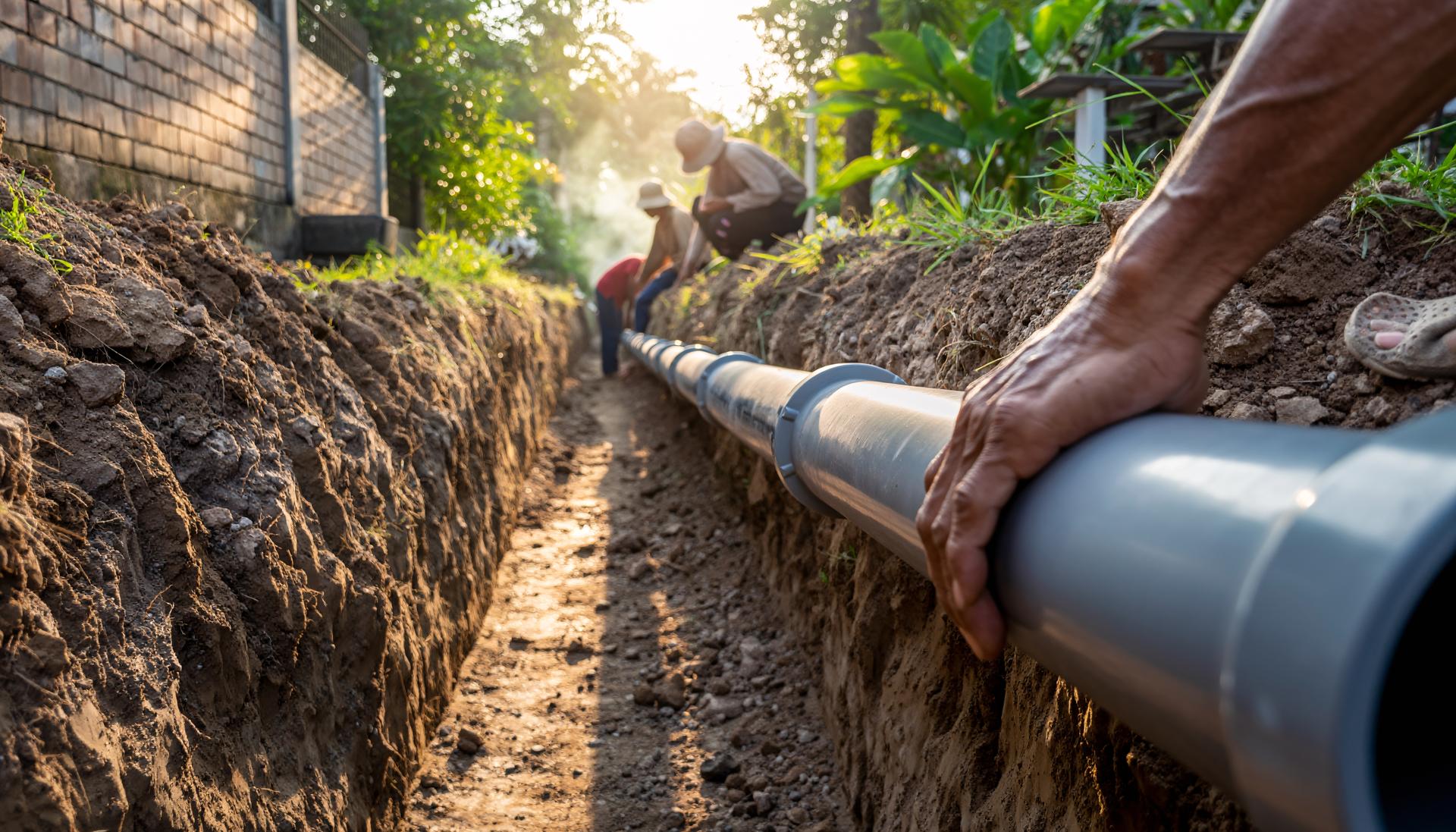
Municipal sewer means your building drains to a city-maintained collection system and treatment facility. Your project typically requires a sewer service line (often called a side sewer or sewer lateral), trenching, bedding, slope control, connection permits, inspections, and restoration of disturbed areas. In Boise, working in the public right-of-way generally involves a Public Works sewer tap permit and following the city’s connection guidance.
Septic means your property treats wastewater onsite using a septic tank and a soil absorption area (drainfield). In Idaho, onsite systems are regulated through the Idaho Department of Environmental Quality (DEQ) rules and local health district processes for permits and inspections. Septic work is as much about site evaluation and layout as it is about equipment and excavation.
When sewer is the better fit
Sewer tends to win when a main is available at the street (or very near the property), the city allows a connection for the intended use, and the site layout makes trenching and slope achievable without major obstacles.
Common Boise-area drivers:
- Smaller lots where a drainfield footprint is hard to fit while maintaining required setbacks.
- Infill projects where existing utilities are already in place.
- Projects where long-term simplicity matters more than onsite maintenance planning.
- Developments in areas where sewer policy, annexation, or capacity planning may affect availability and timing.
When septic is the better fit
Septic tends to win on larger rural lots or acreage where sewer is not nearby, where the soil is suitable, and where you can dedicate space for a primary drainfield plus a reserve area.
Common Treasure Valley drivers:
- No municipal sewer main within practical distance.
- New rural builds where utilities are being brought in as part of lot development.
- Sites where careful grading and drainage design can keep the drainfield performing well year-round.
- Owners who prefer onsite control and plan for routine pumping and protection of the drainfield.
Step-by-step: how to decide septic vs. sewer for a Boise-area property
Goal: Confirm feasibility first, then optimize layout and timeline. Many owners waste weeks pricing a system that cannot be permitted on their lot or cannot be connected under current policy.
1) Verify what is actually available at the street
A quick utility availability check can reveal whether sewer is present, where the main is located, and what a connection route would look like. For sewer, connection work in the public right-of-way typically requires specific city permitting. In Boise, the city publishes a residential sewer installation guide and references a Public Works sewer tap permit for work that involves connection to the city system.
2) If septic is likely, start with soil and site evaluation (not equipment)
Septic is a soil-based treatment system. That makes your soil conditions, seasonal groundwater considerations, and usable site area the foundation of the decision. Idaho DEQ outlines septic system types and emphasizes permitting and installer requirements at the state level, with local processes layered on top.
3) Map setbacks and protect the “no-build” zones early
Septic planning is not only “where the tank goes.” It is also about where the drainfield goes, where the reserve area goes, and where you must avoid building, driving heavy equipment, or placing drainage that could saturate the soil. In Ada County, onsite sewage disposal systems involve required inspections and approval steps prior to backfilling, reinforcing why layout and inspection timing matter.
4) Compare timelines: inspections and coordination steps can be the hidden schedule driver
Both sewer and septic rely on scheduling inspections and coordinating with utilities, especially if trenching crosses driveways, streets, or easements. With septic, inspections often occur at specific stages (such as after excavation and before backfill). With sewer, city permits and right-of-way requirements influence how quickly work can move.
5) Plan for Idaho’s freeze-thaw and drainage realities
In the Treasure Valley, drainage and compaction are not “nice-to-haves.” Freeze-thaw cycles can amplify issues like poor base preparation, settlement, and poorly managed surface water. Whether you are trenching for a sewer lateral or building a septic system access route, the long-term performance is directly tied to subgrade prep, proper bedding, compaction, and keeping water moving where it should.
Septic vs. sewer: side-by-side comparison (Boise area)
| Factor | Septic | Sewer |
|---|---|---|
| Feasibility driver | Soil performance, setbacks, usable area, reserve field planning | Main availability, route, slope, right-of-way requirements |
| Typical excavation scope | Tank excavation, drainfield excavation, distribution components, access planning | Trenching to main, bedding, connection work, restoration (sometimes street/ROW) |
| Permitting and inspections | DEQ rules plus local approval steps and staged inspections before backfill | City connection permits, right-of-way rules, inspections for tap and lateral work |
| Long-term owner responsibility | Pumping schedule, protecting drainfield, avoiding misuse | Maintain private lateral on your property; city handles mains and treatment |
| Budget clarity | Depends heavily on soil, system type, and site constraints | Depends heavily on distance to main, ROW restoration, and city fees |
| Best fit | Acreage lots, rural builds, areas without nearby sewer | City lots, infill, higher density development, limited yard area |
Note: Connection and permitting requirements can vary by jurisdiction and can change with policy or infrastructure planning. Always verify the current rules for your specific address and project scope.
Tips that prevent expensive rework (without talking numbers)
Protect your future drainfield area like a foundation. If septic is on the table, keep heavy equipment, storage piles, and unnecessary traffic off the drainfield and reserve areas. Soil compaction is a silent performance killer.
Confirm the route before you pour concrete. For sewer laterals and utilities, the cleanest trench is the one you planned early. If a driveway, RV pad, or slab is coming soon, coordinate trenching and compaction first.
Schedule inspections before the machine shows up. Ada County requirements for staged inspections on onsite systems underscore how critical inspection timing is. A missed inspection window can idle a project.
Keep surface water away from wastewater infrastructure. Good grading and drainage keep septic drainfields from becoming saturated and help prevent trench settlement for sewer laterals and utility runs.
Did you know? Idaho DEQ recognizes multiple onsite system categories, including Individual Septic Systems, Large Soil Absorption Systems (LSAS), and Alternative Systems. When conventional drainfields are not feasible, an alternative design may still be possible depending on site conditions and approvals.
Boise and Treasure Valley local angle: what homeowners and developers run into most
1) Transition zones exist. You can be “near Boise” and still face sewer access limitations depending on city boundaries, district service areas, annexation requirements, and local policy. If a lot is in a growth area, sewer availability can be a moving target, so it is smart to confirm current connection eligibility early in due diligence.
2) Smaller lots make septic layout harder. Even if soil is decent, the combination of required setbacks, drainfield space, reserve area, and future improvements (shops, pools, patios) can make septic the more restrictive choice on compact parcels.
3) The best plan coordinates excavation with the rest of the build. In the Treasure Valley, the cleanest projects sequence site clearing and grading, then utilities and wastewater, then foundations, flatwork, and drive approaches. That sequencing reduces rework and helps control settlement and drainage issues over time.
Want a clear plan for your lot?
C3 Groundworks helps Boise-area homeowners and developers confirm feasibility, coordinate inspections, and execute excavation and utility work with a safety-first, transparent process. If you are weighing septic vs. sewer, a short site conversation can prevent weeks of uncertainty.
Helpful next steps: share your address, a rough site plan (if you have one), and whether you are building new, replacing an aging system, or evaluating sewer access for development.
FAQ: Septic vs. sewer in Boise
How do I know if sewer is available for my address?
Start with a utility availability check and confirm whether a sewer main is present and connectable for your intended use. If the connection involves work in the public right-of-way, Boise typically requires a Public Works sewer tap permit and adherence to the city’s connection guidance.
What makes a septic system “not viable” on a Boise-area lot?
The most common constraints are insufficient space for a drainfield plus a reserve area, setback conflicts, challenging soil conditions, and site drainage issues that keep soils too wet. Idaho DEQ rules and local approvals drive what is allowed and what must be inspected.
Do septic installations require inspections before backfill?
Yes, staged inspections are common. In Ada County, onsite sewage disposal systems require inspections at specific points, including after excavation and after installation but prior to backfilling. Planning those inspection windows protects your schedule.
If sewer is available, is it always the best choice?
Not always. Distance to the main, depth, required restoration, and site obstacles can make the trench and connection complex. On larger properties, septic may still be a clean, practical solution when soil and layout are favorable.
Can I install septic now and connect to sewer later?
Sometimes, but it depends on jurisdiction policies, future sewer extensions, and how your site is developed. If you want flexibility, design the site so future trenching will not require tearing out key improvements, and keep good records of where all utilities are installed.
Glossary (quick definitions)
Drainfield (Leach Field)
The soil absorption area where treated wastewater disperses into the ground. Performance depends on soil conditions, sizing, and keeping the area uncompacted and unsaturated.
Perc Test
A soil evaluation method used to estimate how water moves through soil. Results influence drainfield sizing and whether a conventional system is feasible.
Sewer Lateral (Side Sewer)
The privately installed pipe that carries wastewater from a building to the public sewer main. Installation often involves trenching, bedding, slope control, and inspections.
Right-of-Way (ROW)
Public land area (often near streets/sidewalks) where utilities are located. Work in the ROW typically requires city permitting and specific restoration standards.
Alternative Septic System
A DEQ-regulated onsite system design used when conventional drainfields are not feasible due to soils, site constraints, or other limitations. Requires specific approvals and installation standards.